 |
| 1957-2005 |
27 February 2015


16 February 2015
A Bit of Chapter 2

Dear and gentle readers, I offer to you a little portion of the second chapter of my next novel - this is number 6, for crying out loud. It is not a "Michael Nitrous" novel, like novels number 2,3, and 4, although some of the same characters appear, and it is set largely on the extra-planetary orb of Bezelda. Go figure.
2.
Allow me to reconnect a few things for you before I turn this over to the omnicscient-voiced narrator. Yeah, the person who is writing this – you know how when you read something, there is often something called a “narrator” who tells the story in such a way that they seem almost god-like. They know what's going on at all times, in all places, and inside the furry little melons of all the people in any given story. It's crazy, but it sure is useful, because you don't have to worry about anything being entirely hidden – unless the narrator doesn't want you to know what's going on. Kapiche?
Well, in just a little bit I'm going to turn this whole story over to some narrator's voice, and I'm going to slide into what a friend of mine would call another aspect of reality. I won't really change, and I won't really be in a different place or time – just a different plane, as it were. You'll see. It's not all that weird, really. But in the mean time, let me reconnect a few things for you.
When you see lights in the sky, don't be so damned sure that they are normal. Don't be so damned sure that they're abnormal, either. They might be a bit of both. This applies to about 80% of the people you meet on a daily basis, as well, so take everyone with a grain of freaking salt. Especially if they're wearing roller skates.
ESPECIALLY if they're wearing roller skates.
When someone gives you something to eat that looks like eyelids and tastes like fish, be careful. You are going to find yourself visiting the commode before too long – I would almost put money on that. We don't gamble too much on Bezelda, but we do have this one game of chance called “pin-flutchey”. In pin-flutchey, several people all take two very sharp steak knives in each hand. That's four steak knives (which we call “klolbs” on Bezelda) per person. We all blindfold ourselves, and then stand in a circle. Beginning with the person who is situated to the northern-most part of the circle and continuing clockwise, each player praises the person to their left, using either standard heroic couplet poetry or Bezeldan pep-mulls. The pep-mulls are a lot more interesting.
When everyone has had the chance to speak, they each throw a certain amount of money into the circle – this amount being determined before organizing the game. After each has thrown in the money, there is a countdown from seven, everyone cries out “pin-flutchey!” throws their steak knives into the air and either runs like hell or stands as still as a statue. You have to do one or the other. If anyone is struck by a knife, he or she gets the money in the pot. If there are two people struck, they split the money, and if there are three or more, all cry out the word “plossit!” and return to the circle for another round.
You can probably figure out the great amount of skill and cunning required to play a game of chance like this. It's not a game for the faint of heart, to be sure.
How did we get on pin-flutchey? Oh yeah, I told you not to eat anything that looked like an eyelid and tasted like fish.
I've never been very good at spontaneous pep-mull creation. Not like some guys I know. You probably know pep-mulls as those Bezeldan poems that are kind of like what on earth is called a limerick, except the rhyming scheme is different. Hell, I guess it's safe to say that there is no rhyme scheme at all to a pep-mull. I think the only really similarity, when you come right down to it, is the fact that both limericks and pep-mulls each have five lines. Aside from that, the comparison kind of falls apart. Here is one of my favorite pep-mulls, written by Cran Hylen. You may have heard about him before, as he was the poet-laureate of Bezelda for some time (at least in one particular aspect of reality). Here it is:
Blank? Or not with cheese
opulent stink of ice-time
wobble wobble,
wobble crashing parties.
Stijt.
That last word, “stijt,” has no real translation into English, but it is a really common word in the Bezeldan day-to-day vocabulary. It means something like “wanting to go and get some toasted bread-product and prepare a sandwich of sorts as long as I have the time to do it without interrupting the rest of my regularly-scheduled daily activities.”
That actually comes up in conversation quite frequently on Bezelda, believe it or not.
Cran Hylen was an incredibly good poet. He had lost all of the hair on the top of his head, and it regrew on his left forearm. Usually he kept it fairly short and parted it with the addition of a little hair tonic. Every now and again, for a season, he would let it grow long and then push it back with the aid of a nicely-scented pomade.
You just never knew about Cran Hylen.
13 February 2015
07 February 2015
The Conclusion of "Radio" - #3 in my "Michael Nitrous" Trilogy of Novels

Here you go, friends. I just put the finishing touches on my newest novel, and chapter 19 nails the coffin shut, as it were. This is the third "Michael Nitrous" novel, and I think it ties the others together. Enjoy!
19.
Salo
is 100% woody. Salo is 100% filmy. That's right – it is both
entirely woody and entirely filmy. It is the only substance on the
face of the earth that has joined, in a hypostatic union of sorts, a
perfect amount of woodiness and a perfect amount of filminess.
Scientists using the most advanced quulmeters cannot figure it out.
It is as though the woodiness and the filminess exist within and
beside and around one another.
You might
recall that Dr. Kichener-Mellon, the Bezeldan Metaphysicist who was
so critical to an earlier part of this tale put it this way in his
award-winning dissertation “Up My Big Fat Creek With Your Lumbering
Sliderule”:
x
= [(y – z) + p] + s
Where:
x
is the separation of the layers, measured in sweat, and
y
is one layer,
z
is another layer,
p
is the woody/filmy proportion, and
s
is the salo-coefficient.
It came
to be realized that salo was itself the one substance that not only
perfectly matched the salo-coefficient (for obvious reasons), but
also wreaked havoc on the rest of the equation due to the woody/filmy
proportion being expressed as either 1 or 1/1. Salo became the
philosopher's stone – the rosetta stone – the alchemic wonder of
the ages. Salo was not only a tasty ethnic treat for Ukrainians
around the world, but also a component in every research laboratory
on Bezelda.
Within
months, scientists had narrowed down (on paper, anyway) the formula
for cold fusion using salo and the salo-coefficient, and it slowly
dawned on them that the path of cold fusion was one they did not want
to walk. The path of cold fusion would leave the salo depleted.
Expended. Spent.
As it
would leave the moral fabric of Bezelda.
Dig this,
my friends – when the American scientists detonated the first
atomic bomb way back in the 1940s, they did not know it, but at the
time the detonation resulted in a 18% drop in woodiness on the planet
earth. Earthly scientists had no idea what filminess and woodiness
were, let alone how a proportion between the two could affect life on
earth, so they went ahead and detonated several atomic weapons –
resulting in woody levels to drop to dangerously low levels.
How could
earthly scientists have known? They had no quulmeters.
The
Bezeldan scientists figured out what the repurcussions of cold fusion
would be well before they ever attempted it. Mock trials were set up
in large salo-generating laboratories, and industrial-strength
quulmeters were calibrated to insanely high levels of accuracy. In
the end, the Bezeldan High Council of Common Sense ruled that cold
fusion must not be undertaken for the good of future Bezeldan
generations. The scientists boarded up the cold fusion laboratory,
coated the salo in dark chocolate, and threw a gala shindig. The
poet-laureate of Bezelda, Cran Hylen, wrote a sacred pep-mull to
commemorate the event:
In the
darkest of night-time science
O!
With a quul-knowing of filmish-ness.
For
young,
for
old.
Adipose
pork tissue without reproach; without guile!
All of
Bezelda agreed that it was one of the finest pep-mulls ever written,
and it was eventually engraved on a plaque that stands at the very
spot where the cold-fusion laboratory used to be.
At the
same time that the pep-mull was released into the eternal ether of
all layers of existence, David Hall realized what the turntable
looked like. In one place in time, anyway.
In
another place in time, a black-bladed dagger appeared, seemingly out
of nowhere, and materialized in the unfortunate position of David's
cranium. This was while he was standing between layers of existence
very near NEK-CHEK enterprises. Soon the two entities (David hall
and the dagger) were occupying the same space in the same aspect of
existence, and one or the other had to give.
You can
figure out how this fits together. Rab-klaat.
02 February 2015
Will

The
fourteen-pound whistler came lumbering through the almond section of
the nut emporium – lumbering with a hoot and whirl. Whirling is no
small order for a whistler of the fourteen-pound variety, mind you.
The rest of the body was proportional to the whistling portion, and
giving an honest “whirl” to that much flesh takes some energy.
We
have all heard the stories of the folk with dense lips. In some
parts of the world they comprise entire tribes or clans or ethnic
groups. The lips are not large, mind you – only dense. Fourteen
pounds of lip tissue compacted into the usual scant few inches of lip
space makes for a very dense package. It is as though the lips were
composed of lead, or at the very least pewter.
Soft,
supple pewter, however.
So
the fourteen-pound whistler, as it lumbered through the almond
section of the nut emporium, attached as it was to the rest of the
flesh (in varying densities) known as “Jerry Pizzle”, gained
traction in the ether. The ether defies good purchase most times,
and it is hard to build up speed. With a hoot and a whirl and the
production of a merry tune, the whistler moved faster and faster. It
whirled like a dervish. The owner of the whistler (Jerry Pizzle),
thought himself to grow nauseated, but for only a moment. He stopped.
He ceased all forward and whirling (in some regions known as
cyclical or gyroscopic) motion.
From
his pocket he pulled a test tube and forceps.
Jerry
Pizzle thought to put down the whistler, but he could not. He bent
over a bin of almonds, rather, and reached out carefully with the
forceps. The shiny, stainless steel forceps were opened just the
right amount to receive a beautiful roasted almond, and his hand
quivered a bit with excitement and anticipation. His eye landed on a
most delectable almond.
Only
the finest almond would do, honey-child.
The
forceps were poised but a hair from the surface of the fine and
exquisite nut-meat, and the fourteen-pound whistler made its
distinctive call. “Phweeeeeeeeeeeeee-ehwheeeeeee” went the
fourteen-pound whistler. The forceps trembled. Jerry Pizzle
drooled, but just a little.
Jerry
Pizzle withdrew his hand, and with it, the forceps.
“Phweeeeeeeeeeeeee-ehwheeeeeee,”
went the fourteen-pound whistler.
With
a heel-turn executed flawlessly, Jerry Pizzle pulled the
fourteen-pound whistler away from the almond bin, and with it, his
hand. With his hand came the forceps. And with the forceps came any
hope of plucking such a fine almond from the bin. And with that came
any chance of the fourteen-pound whistler violating its dicipline.
No
almond meats for the fourteen-pound whistler until the Feast of
Lemonsuck.
If
ever.
“Phweeeeeeeeeeeeee-ehwheeeeeee”
26 January 2015
Quirk (just for you)

So
you had a friend who you thought was a friend, but turned out to be
something substantially more than a friend. On the other hand, there
was that person you thought was a friend and turned out to be quite
less.
This
is the way we used to think. Doo dah. Doo dah.
There
were people living in a settlement very many miles away from the rest
of us, and we were forced to view them with a great deal of mistrust.
They had skin that was a slightly different shade than ours, and
they pronounced the letter “a” differently. We had to think of
them as “outsiders,” and we threw rotten vegetables into their
backyards when they were not looking.
These
were the things we used to do. Doo dah. Doo dah.
We
knew better. We all knew better. You think you knew the most? You
are wrong. We knew more. When the buzzer sounds and the game is
over, the judges are going to look at us and say “you are the
winners! Huzzah! Hale fellow, well met! Gatchooba!”
That
was the way it was. Doo dah. Doo dah.
You
used to buy paperback novels and read all about who killed who and
who slept with who and who was stealing from who and how it is that
authors never know how to use “who” and “whom” correctly, but
you never paid any attention to that because you were focused on the
killing and the sleeping and the stealing.
Not
any more.
Now
you kill and sleep and steal and you check your grammar and your
spelling and your syntax and you mind your pease and queues. And no
one ever mentions a thing about how you used to have this friend who
you thought was a friend but turned out to be something substantially
more than a friend.
Doo
dah.
19 January 2015
Julien

Did
you ever meet that kid that we called “Camphor”? He was a quiet
kid. Short and quiet, as I recall. I have no idea how he got the
name “Camphor,” but that's what we called him. I never asked,
and now I kind of wish I had.
Camphor
used to walk up and down the main street of town, stopping and
looking into the shop windows. He would spend the longest time
looking into windows that you just wouldn't think could hold the
attention of a thirteen year-old boy, but there you have it. He
would stop in front of the hardware store, and look at a window
display of chicken wire and galvanized washtubs – all the while
moving his thin little lips with no sound coming out. I've seen lots
of folks do that, of course, but never in the places that little
Camphor would do it.
This
was Dubuque, mind you. Dubuque in the hey-day. Or do you call it
“hayday”? I was never sure if it was one word, two words, or a
hyphenated word. Anyhow, it was Dubuque when Dubuque was more than
just a place on the river. Camphor would sometimes stop outside the
big hotel (you know the one I'm talking about – if you know
Dubuque, that is) and wait for someone to come out. It looked as
though he was expecting a celebrity to come strolling out of the
lobby, and I think one time I even saw him holding a pad of paper and
a chewed-off pencil, looking for all the world like he was going to
ask someone for an autograph. This might have been, as you know
Dubuque was a hopping place for all sorts of big-city performers who
might have driven up from Davenport or over from Chicago just to do a
show or maybe to get away from the big city.
I
don't think he ever got any autographs, as best as I can figure.
Camphor,
he came down with a disease when he was just what nowadays they call
middle school age. It was some kind of odd disease where he started
hearing loud explosions all the time. It started with him sitting
bolt upright in the middle of class, and clapping his hands to his
ears. At first the teachers thought he was being disruptive, but
after the doctors in Iowa City told his mom and dad what was going
on, folks got used to it. The loud noises started keeping him up at
night, though, and by the time he was fifteen he was missing from
school almost every day. Sometimes we'd see him around town, small
and quiet, and looking a little flinchy and sad.
You
would be too, I suppose.
Camphor's
dad died out on the river the next year, and his mom went away. No
one asked where. Camphor went to go live in what I suppose today you
would call a “group home,” but then was just some kind of a place
for unfortunate folks to live. It was run by the Church, I think.
Who knows? I once saw what I thought was a nun there, so I'm just
taking a guess. Anyhow, that's where Camphor went. We saw less and
less of him, and eventually he just seemed to disappear. I only hope
the same could be said for the explosions in his head.
I'd
like to be able to say that I saw him years later, but I never did.
No one ever did, as far as I can tell. He just became one of those
people you only think about when you see something that you haven't
seen for a long time – or when you hear an explosion in your head
that no one else can hear.
And
God forbid you end up hearing the explosions that no one else can
hear.
12 January 2015
"19a" - 1980? You Like? A Chapter From "Yerba Mate"

Roller skates are another invention that was given to the inhabitants of the earth by ancient astronauts from an alien civilization. Space travelers from the planet Gecko-13 were zipping through the interstellar expanses over 4,000 years ago (in earth years), listening to eight-track tapes of whale music (produced by whales on another planet – a third planet, neither Gecko-13 nor our own “earth”) and looking for a good place to sell their load of sushi-stone. Sushi-stone, for the uninformed, is not what the name sounds as though it might imply – it is simply a carbon-based fuel source; an edible carbon- based fuel source mined from the depths of the Geckian oceans. Check it out the next time you are on Gecko-13.
Anyhow.
The sushi-stone vendors from Gecko-13 were traveling through this neck of the interstellar woods when they happened upon our planet. They set down for a short visit, and aside from being mistaken for minor deities by a tribe in the Amazon basin, had little to no contact with any earthlings. They just made a quick pit-stop, as it were, to empty their sanitary holding tanks and get a little exercise. The most beloved exercise of the people of Gecko-13, of course, is what we on earth think of as “roller skating” but which they call “bletching” (it still is, in fact – bletch sales on Gecko-13 have gone through the roof in recent years, in fact). From high up in the earth's atmosphere the travelers from Gecko-13 saw the plazas standing outside of some awesome Mayan ziggurats, and decided that they would be the perfect place for a little midnight bletching. They settled their sushi-stone powered spacecraft into a soft landing in the middle of the jungles of modern-day Mexico and laced up their bletchers.
Anyhow.
The sushi-stone vendors from Gecko-13 were traveling through this neck of the interstellar woods when they happened upon our planet. They set down for a short visit, and aside from being mistaken for minor deities by a tribe in the Amazon basin, had little to no contact with any earthlings. They just made a quick pit-stop, as it were, to empty their sanitary holding tanks and get a little exercise. The most beloved exercise of the people of Gecko-13, of course, is what we on earth think of as “roller skating” but which they call “bletching” (it still is, in fact – bletch sales on Gecko-13 have gone through the roof in recent years, in fact). From high up in the earth's atmosphere the travelers from Gecko-13 saw the plazas standing outside of some awesome Mayan ziggurats, and decided that they would be the perfect place for a little midnight bletching. They settled their sushi-stone powered spacecraft into a soft landing in the middle of the jungles of modern-day Mexico and laced up their bletchers.
Speeding out of their spacecraft in a frantic round of “snap the whip,” a line of seven Geckian astronauts whizzed past a native named Earl who was wandering amidst the ziggurats while dealing with his insomnia. The poor fellow looked up to see seven wheeled god-like creatures, laughing and shouting as they bletched, and the sight scared him almost half to death. He ducked behind the stones of the temple, trembling and shaking his head in disbelief.
On an ironic note, this poor, frightened tribesman happened to be a distant but direct ancestor of the owner and proprietor of “El Taco Muchacho,” where Michael Nitrous and Jerry Grogan enjoyed their fine plates of tacos and nopalitos tiernos. That's just how these things work out some times.
The astronauts from Gecko-13 skated (or bletched, if you prefer) for a good fifteen minutes or so, and then headed back to the ship. Just as they were getting ready to leave, one of the Geckian travelers decided to dispose of a small stone that he had found in his roller skate (or bletch, if you prefer). He stood in a cargo door and turned his bletch upside down to shake the little pebble out. Just as he had done this the pilot hit the accelerator, throwing the astronaut violently to one side. His bletch was knocked out of his hand as he collided with a bulkhead (that is astronaut-speak for 'wall'). The Geckian roller skate dropped to the ground as the spaceship sped away and out of sight. When Earl had regained his composure he walked over to pick up the bletch. He kept the bletch with him all the rest of his days, but could never really bring himself to explain to his friends and family exactly how it was that he came to be in possession of such a strange, futuristic object. The Mayan priests put the bletch into the grave with poor Earl's body when he died, and there it rested for several thousand years, until an archaeologist came across it in the mid-nineteenth century while hunting for Mayan pottery and other exciting relics. The archaeologist had no idea what it was that he had found, but brought it back home to merry old England with him as a curiosity, where he gave it to his brother as a birthday present (he was a notorious cheapskate – no pun intended). His brother happened to be a sporting goods wholesaler (you didn't know that they had those in merry old England in the middle of the nineteenth century, did you?) who spent his free hours as a collector of South American sporting antiquities – an unusual combination, but not altogether unlikely, now is it?
The situation presented by this unlikely array of events, objects, and interests is just one more example of how it is that deep connectivity works. You might think that it is all just coincidence, but it is actually a lot less dramatic than that. It is just another load of bogus storytelling, used to make the author's point.
On an ironic note, this poor, frightened tribesman happened to be a distant but direct ancestor of the owner and proprietor of “El Taco Muchacho,” where Michael Nitrous and Jerry Grogan enjoyed their fine plates of tacos and nopalitos tiernos. That's just how these things work out some times.
The astronauts from Gecko-13 skated (or bletched, if you prefer) for a good fifteen minutes or so, and then headed back to the ship. Just as they were getting ready to leave, one of the Geckian travelers decided to dispose of a small stone that he had found in his roller skate (or bletch, if you prefer). He stood in a cargo door and turned his bletch upside down to shake the little pebble out. Just as he had done this the pilot hit the accelerator, throwing the astronaut violently to one side. His bletch was knocked out of his hand as he collided with a bulkhead (that is astronaut-speak for 'wall'). The Geckian roller skate dropped to the ground as the spaceship sped away and out of sight. When Earl had regained his composure he walked over to pick up the bletch. He kept the bletch with him all the rest of his days, but could never really bring himself to explain to his friends and family exactly how it was that he came to be in possession of such a strange, futuristic object. The Mayan priests put the bletch into the grave with poor Earl's body when he died, and there it rested for several thousand years, until an archaeologist came across it in the mid-nineteenth century while hunting for Mayan pottery and other exciting relics. The archaeologist had no idea what it was that he had found, but brought it back home to merry old England with him as a curiosity, where he gave it to his brother as a birthday present (he was a notorious cheapskate – no pun intended). His brother happened to be a sporting goods wholesaler (you didn't know that they had those in merry old England in the middle of the nineteenth century, did you?) who spent his free hours as a collector of South American sporting antiquities – an unusual combination, but not altogether unlikely, now is it?
The situation presented by this unlikely array of events, objects, and interests is just one more example of how it is that deep connectivity works. You might think that it is all just coincidence, but it is actually a lot less dramatic than that. It is just another load of bogus storytelling, used to make the author's point.
(Roller skates were actually first patented in the late eighteenth century and then made popular about a hundred years later. There were likely no aliens involved whatsoever. Take it for what it is worth.)
Rollerskating, however, can be a rather spiritual exercise, if you believe in that sort of thing. It provides ample opportunity for glope-steps, even though one does not always take “steps” in the traditional sense of the word. There is something about the spinning of the roller skate wheels that sets up a static field, thereby influencing the kinetic dingeddy-dangle...blah blah blah...you get the idea.
Suffice to say that roller skating gives the opportunity to experience deep connectivity in a way that most people do not realize. Just being around people who are roller skating can have a profound effect on a person. This may account for the harmonic convergence that was beginning in the United States of America in the 1980s and which came to a screeching halt with the close of that decade, just as roller skating rinks were closing in droves.
Maybe.
05 January 2015
17 December 2014
Please Be Careful...
Do
you remember me telling you all about the hidey-hole? Sure you do.
We talked about it over cocktails last month sometime. Don't you
remember? Come on. Put on your thinking cap and try to remember it.
It was a nice conversation, as conversations go. We had cocktails,
and you did that thing with the stem of a maraschino cherry.
You
must remember it.
Here,
let me get this IV going. Give me your arm. The other arm. Okay.
Thank you. This medicine that I will introduce into your system will
help you remember how I told you all about the hidey-hole. The
medicine will feel a little cool as it enters your vein. Okay, maybe
cold. Or rather, ice cold. All right, I'm sorry. It is actually
painfully cold, isn't it? Well, you will warm up in a second.
There
you go.
How
are you feeling? You look pretty good. You look a lot better than
Chaz over there. Chaz looks downright nauseous. He always gets that
way when he has the IV going. Yes, it is the same medicine that you
are getting. You look a lot better than Chaz does, though. What's
that? You feel nauseous? That's okay. You look good, though.
Now
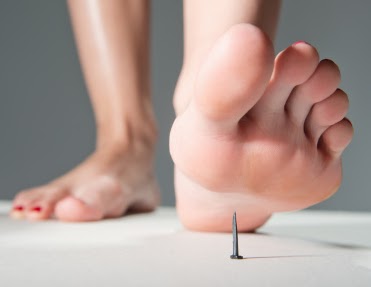
then, tell me about the hidey-hole. Do you remember where I said it
was? Do you remember how deep it is? Do you remember what I put in
the hidey-hole? Let me show you this picture. Yes, that would be a
picture of what we put down the hidey-hole. It looks bigger in
person, though.
Oops.
Let me get you a bucket.
There
you go.
So
you remember it, don't you? Of course you do. And you had your hand
down the hidey-hole, didn't you? Sometimes people lose fingers when
they put their hands into hidey-holes, so you should be very careful.
Oh, it wasn't your hand? Yes, of course. You stepped into the
hidey-hole. Well, that can be even more dangerous. Just imagine
what you could step on. Make sure that you wear big, heavy boots
with protective soles if you go stepping into hidey-holes in the
future, okay?
But
don't go stepping into hidey-holes, okay?
There,
now. The IV is all done. You've done a fine job of remembering.
Chaz? Oh, don't worry about Chaz. They always have to carry him away
like that. The body bag? He just likes the secure feeling that it
gives. Pay no attention to it. He's fine.
Here's
a maraschino cherry. Can you do that thing with the stem again?
08 December 2014
"Limping Through the Charleston" -or- "If This is St. Petersburg, Then Where Are All the Liposuction Clinics?"
 Little
Danny DiBlasio (no relation to the Connecticut DiBlasios, the
Kennebunk DiBlasios, or even the DiBlasios over on 83rd
Street whose old man was a dope pusher in his spare time) looked at
himself in the big mirror that hung outside the county building. He
smoothed his little cowlick with a little bit of spit in his palm,
and gave thanks that it was not a larger and angrier cow that had got
to him when he was born. That was, of course, the story he was told.
Heck, we were all told that story – about how old Doc Needleheim
(the OB-GYN man who delivered us – every stinkin' one of us, in
fact) was also into animal husbandry (still punishable by
dismemberment under the laws of several states), and how when we were
being whelped, one of his bovine companions strolled into the
delivery room. Just as we popped our little noggin out of the birth
canal, old Bessie reached over with that big old tongue of hers and
took a lick of our salty little melon, still dripping with the juices
of the womb.
Little
Danny DiBlasio (no relation to the Connecticut DiBlasios, the
Kennebunk DiBlasios, or even the DiBlasios over on 83rd
Street whose old man was a dope pusher in his spare time) looked at
himself in the big mirror that hung outside the county building. He
smoothed his little cowlick with a little bit of spit in his palm,
and gave thanks that it was not a larger and angrier cow that had got
to him when he was born. That was, of course, the story he was told.
Heck, we were all told that story – about how old Doc Needleheim
(the OB-GYN man who delivered us – every stinkin' one of us, in
fact) was also into animal husbandry (still punishable by
dismemberment under the laws of several states), and how when we were
being whelped, one of his bovine companions strolled into the
delivery room. Just as we popped our little noggin out of the birth
canal, old Bessie reached over with that big old tongue of hers and
took a lick of our salty little melon, still dripping with the juices
of the womb.
Did
I mention that you might not want to read this while eating
breakfast?
Anyhow,
Bessie took a lick, and now we all have these ridiculous patches of
our hair that will not sit still when we try to style them. Cow
licks. Licks from a cow. Uggh. That is what little Danny DiBlasio
tried smoothing down with a little spit as he looked into the big
mirror that hung outside the county building.
Little
Danny looked at his watch and realized that he was late for his
appointment. He gave up on his hair and ran up the flight of stairs
into the flag-monger's shop, taking the last three steps in a leap.
He opened the door and stepped inside, just as his nostrils were met
with the heady, intoxicating aroma of brand-new flags, fresh from the
oven. He breathed deeply and urinated. Just a little bit though.
Urinated, that is. He breathed deeply but urinated sparsely. I
think you know what I'm talking about here.
Or
do you?
The
elderly woman behind the counter addressed little Danny DiBlasio ever
so abruptly. She croaked some kind of words at him. They might have
been Croatian – Danny was not completely sure. He nodded politely
and tried to reply in the only semblance of a foreign language he
could muster.
“Me
have-o appointiamente con el anager-may of-o los flagoleo shoppo,”
tried Danny. “Danke schoen, y muchas dinero, babycakes.”
The
woman behind the counter stood up and broke wind. An uncomfortable
silence ensued, which Danny tried to break by feigning a coughing and
choking spasm. The woman quickly left the room and Danny thought
that perhaps he should have feigned a seizure instead – that one
works every time, he thought to himself.
In
but a moment, the man that Danny knew as “Clubb-o” appeared
behind the counter, twirling his mustache, which he kept in a small
box. He looked at Danny, stroked his mustache twice, put it back in
the box, snapped the cover shut and slid it into one of his trouser
pockets. One must always keep one's mustache close at hand, you
know.
“Forty-eight
of them?” asked Clubb-o at long last.
“Forty-eight,”
replied little Danny DiBlasio.
“I'll
have them ready for you next Tuesday,” said Clubb-o, turning on his
heel and disappearing into his shop.
“Thank
you,” said to Danny DiBlasio to the thin air.
“No
y problemas, tovarish. Ich habe ein oompa-loompa im mein hosen,”
said the elderly woman – in flawlessly fluent Croatian.
29 November 2014
Great Deals Abound!
You missed getting the perfect gift for that someone special on Black Friday? Don't despair! You can pick up all of my discounted titles on Lulu.com!
There is something for everyone!
http://www.lulu.com/spotlight/martinipen
17 November 2014
Keats? Or Keats?

There were no figs left
in the parlor. Not a single one.
Trentwiler walked through
the entire rectory, trying to find but a single fig, but he came up
empty-handed. “Just my luck,” he said aloud, “just my rotten
luck.”
He made his way out of
doors and found his sedan parked where he had left it the night
before, although it had changed color from coal-black to a rather
cornflower blue shade with white trim and running boards. Trentwiler
paused a moment. “Damned vandals,” he muttered as he opened the
door and slid in behind the wheel.
Out of the driveway of
the rectory and then down the road he raced, speeding toward the
village. His only thoughts were of figs, which he knew were available
at the greengrocer in Oneonta. Surprises abounded this morning,
however, for as he rounded a bend in the road near the edge of a
trout stream, a young woman appeared, standing ankle-deep in the
water. Her hair was raven, interlaced with a small garland of
flowers, and her eyes wept great drops of crimson, which traced lines
down the milk-white skin of her cheeks.
Trentwiler slowed the
sedan and came to a stop at the edge of the stream. He got out and
walked to the edge of the water. The young woman looked as though
she might have some information regarding figs, but he was
scared to ask. He looked closely at her and suddenly recognized the
mark upon her upper arm.
“Were
we, in fact, butterflies?" he asked, "In a dream?”
The
young woman looked at him deeply. The shadows of oak leaves played
upon the both of them. “Rather,” she said, in a voice so soft,
“ask yourself, my love, 'whether you are not very cruel to have so
entrammelled me, so destroyed my freedom'.”
Trentwiler
held up a hand mirror to her face. The both of them turned into
gossamer-winged monarchs, and the hand mirror splashed into the
stream.
14 November 2014
Another Casablanca
I looked down into the
little hidey-hole and strained to see if the earlobe-shaped nugget of
glass was still there. Every now and again you find nuggets such as
this in a hidey-hole. I have every reason to believe you know
exactly what I am talking about – don't try to tell me you don't.
Hidey-holes come in all
shapes and sizes. Hidey-holes are often found on the side of small
outcroppings of earth, specifically designed to harbor a hidey-hole.
This one was no different.
I looked in, but I could
not spy the earlobe-shaped nugget of glass. It was a nugget given to
me by my boyhood hero, Great Uncle Adolf. Great Uncle Adolf
collected glass nuggets, and he only rarely shared them with friends,
family, and loved ones. I was apparently quite special, and as a
favored great-nephew, I merited (it seemed) to be given a
particularly heinous nugget. That is what Great Uncle Adolf called
it, anyway – a “heinous nugget.”
I never figured that part
out.
Sometimes, when you are
given a “heinous nugget,” you go about and tell all the world of
your windfall. Other times you are content to keep it to yourself,
take large doses of painkillers, and dance a merry jig in the privacy
of your own home. This had been my habit in the reception of every
other heinous nugget I had been bequeathed – until this
one. When I received the particularly heinous nugget from Great
Uncle Adolf, I immediately went out to the small outcropping of earth
near the truss factory behind my house, located the little
hidey-hole, and placed the nugget there. I pressed my ear to the
soil and listened to the “thrum-thrum-thrum” of the machinery
deep within the bowels of earth mother.
“Thrum-thrum-thrum.”
But that was many, many
years ago. And now, lo, these many, many years have passed, and the
machinery deep within her bowels no longer makes the thrumming sound.
My eyes are dim, and my own bowels make powerful churning noises.
The meadowlark has flown well beyond the field of grey and oily corn.
And I cannot locate the
earlobe-shaped nugget of glass. Not a single one of us could, who
had ever been given a “heinous nugget”, and who did not keep it
pressed within our sweaty little palm. When the machinery ceases to
thrum, the hidey-holes no longer give up their treasure.
Go.
Go and learn what this
means.
Subscribe to:
Posts (Atom)